
Every small DC motor also functions as a dynamo, that is, an electric power generator. Simply turn your shaft quickly so that your coil cuts the lines of force from the field of the permanent magnet that exists inside it and electric energy is generated.
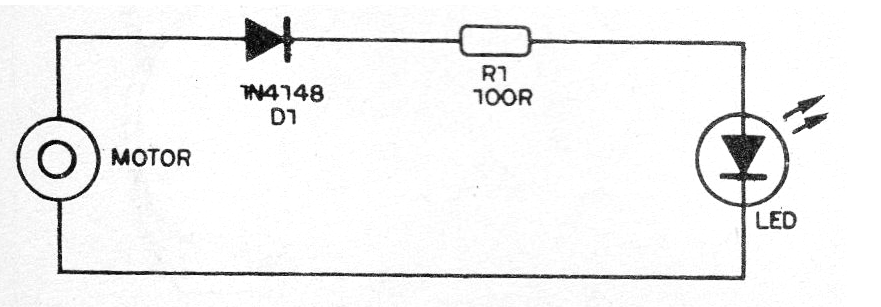
In figure 1 we show how to do this giving the scheme of the system that we will use.
The connections that must be made between the various elements are shown in figure 2.
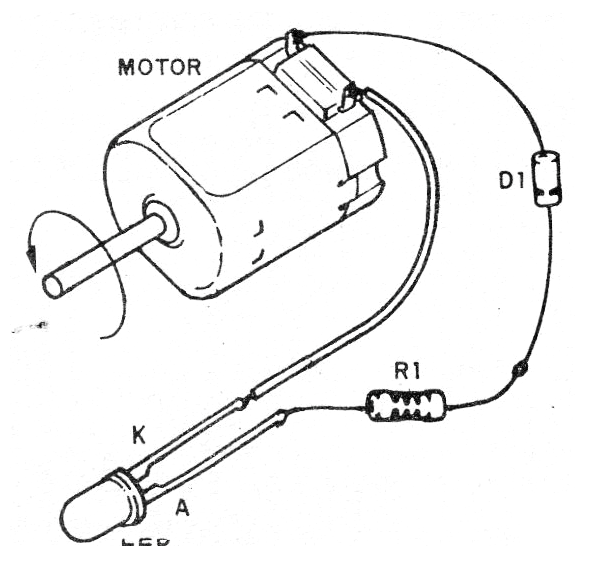
The resistor functions as a current limiter and the common diode a rectifier, since depending on the direction of rotation of the motor, a reverse voltage may appear on the LED, which would cause it to burn.
To produce power and turn on the LED, simply turn the motor shaft quickly with your fingers. Try one way or the other because the LED will only light up in one of them.
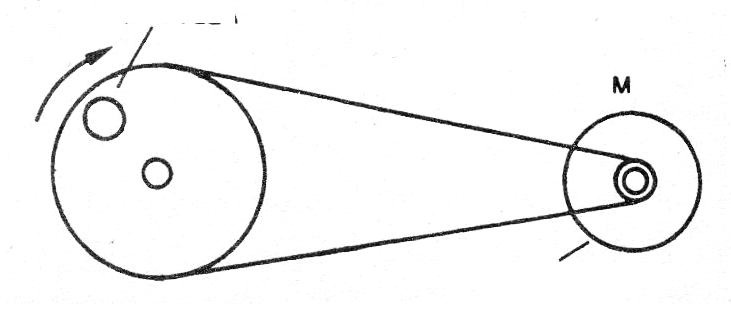
For more energy, and more stable, we can couple to the engine a crank and pulley system, as shown in figure 3.
Material list
D1 - 1N4002 - silicon diode
LED- Common LED of any color
R1- 100 ohms x 1/8 W- resistor - brown, black, brown
M1- Common DC motor (with permanent magnet)
Miscellaneous: wires, solder, etc.


