
With only one transistor (PNP or NPN) you can make a toy phone with good performance thanks to the amplification of the sound. The system is powered by batteries and the wire between the stations can be up to 50 meters in length.
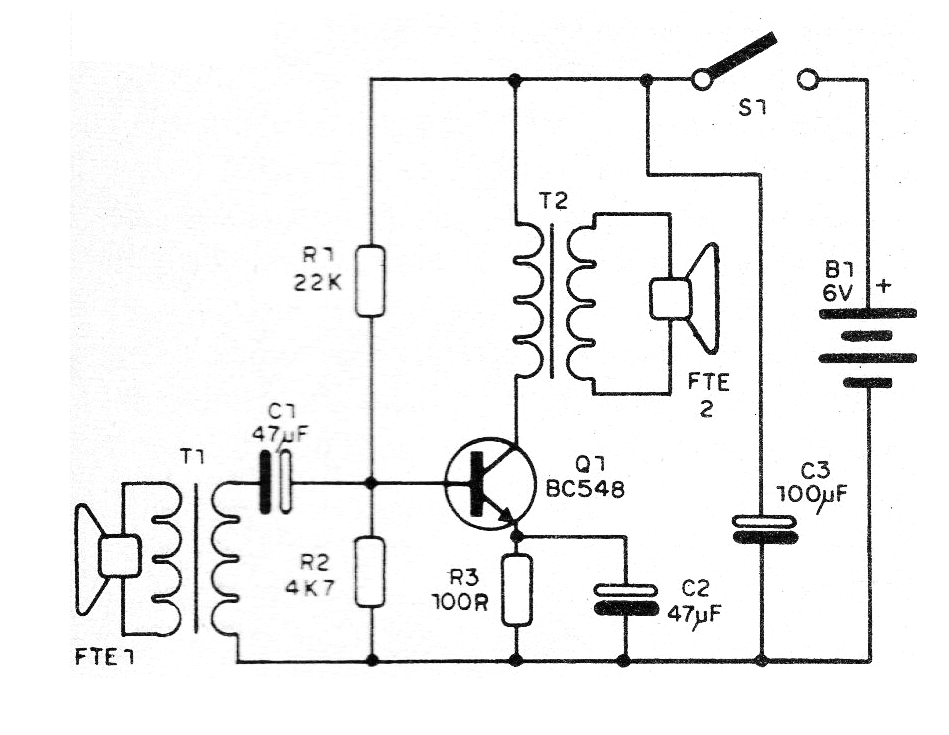
In figure 1 we have the basic circuit using an NPN transistor. To use a PNP transistor simply reverse the polarity of the batteries and the electrolytic capacitors.
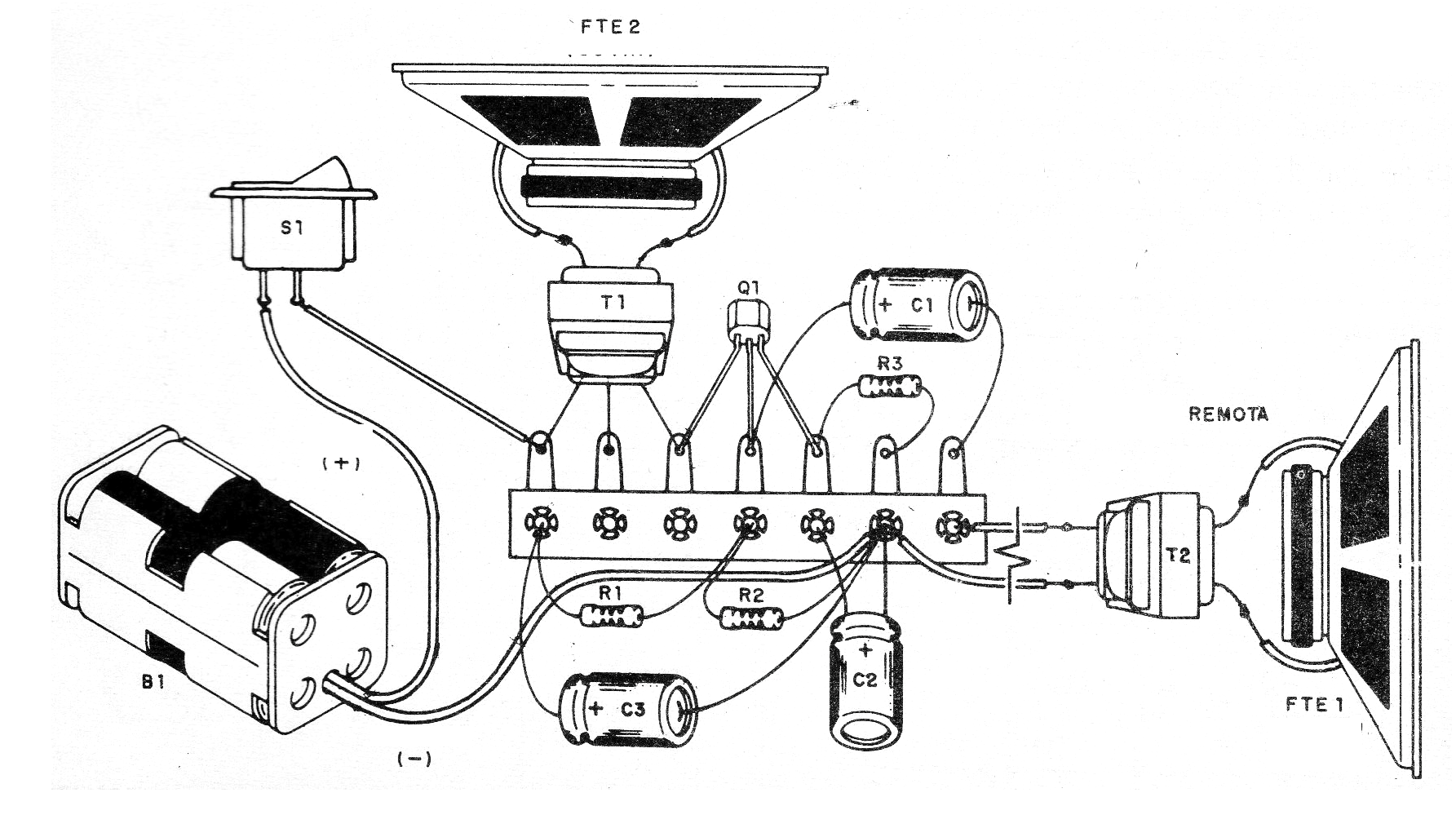
The assembly can be done on a small strip of insulated terminals and the assembly installed in a small plastic box. The arrangement of the components on the strip is shown in figure 2.
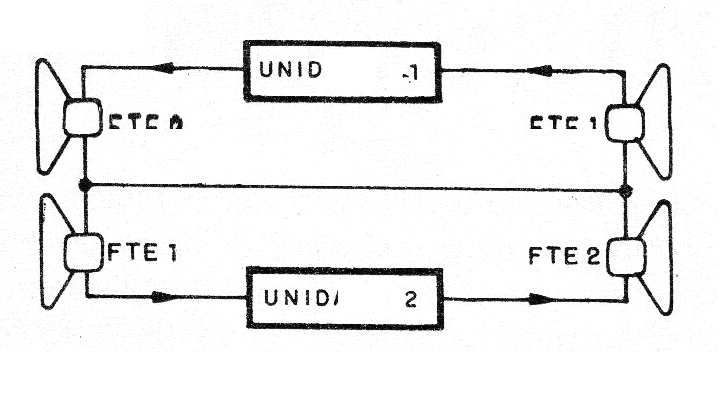
For the bilateral communication, two similar units must be set up. However, one can adapt a talk-hear key that reverses the function of the speakers. Figure 3 shows how to use two circuits in a telephone system.
The transformers are of the output type found on old transistor radios, but even transformers that have a high voltage (110 V or 220 V) and a low (5 to 12 V) winding can be tried. Other components are common and the speakers should be small for ease of handling.
Material list
Q1 - NPN or PNP general purpose transistors - see text
T1, T2 - Transformers - see text
FTE1, FTE2 - Small Speakers
S1- On-Off switch
B1 - 4 small batteries
C1, C2 - 47 uF x 6 V or more - electrolytic capacitors
C3 - 100 uF x 6 V or more - electrolytic capacitor
R1 - 22k ohms x 1/8 W - resistor - red, red, orange
R2 - 4k7 x 1/8 W - resistor - yellow, violet, red
R3 - 100 ohms x 1/8 W- brown, black, brown
Miscellaneous: terminal strip, battery holder, mounting box, wires, solder, etc.


