
This is an improved version of the previous circuit in which each touch has the closure of the contacts of a relay for a time that can be adjusted between a few seconds and a few minutes by the potentiometer P1.
The circuit is shown in figure 1.
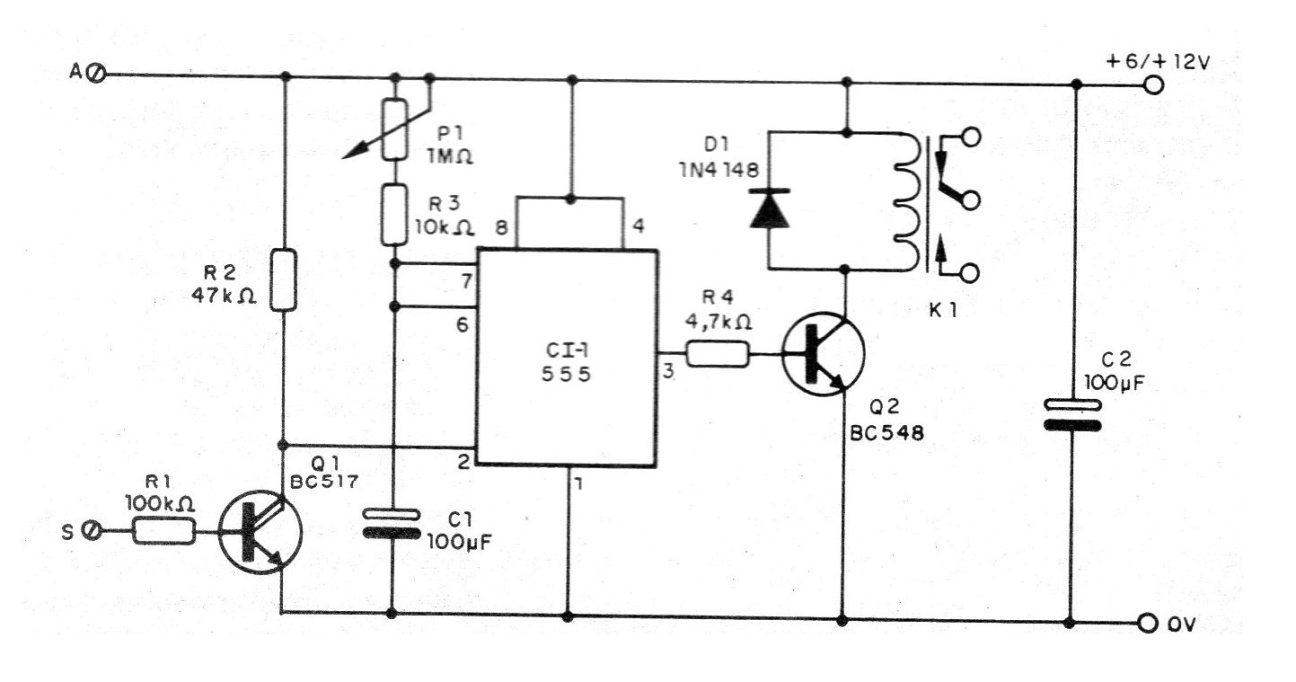
The base of the circuit is a 555 driven in its gateway by super transistor BC517. When we touch the sensor the super transistor leads and takes the trigger pin 2 of the 555 to the low level. This causes the CI output on pin 3 to go high and the transistor Q1 to be saturated, triggering the relay.
The time that the output remains at the high level depends on the setting of P1 and also on the value of C1 that can have from 10 to 1000 uF depending on the application. In the relay contacts we can connect lamps, alarms or other devices that must be triggered by the touch.
The circuit can be supplied with voltages of 6 or 12 V depending on the relay. For stationary sources (batteries) it will be interesting to connect point A to earth in order to provide travel for the tripping current.
The assembly on a printed circuit board is shown in figure 2.
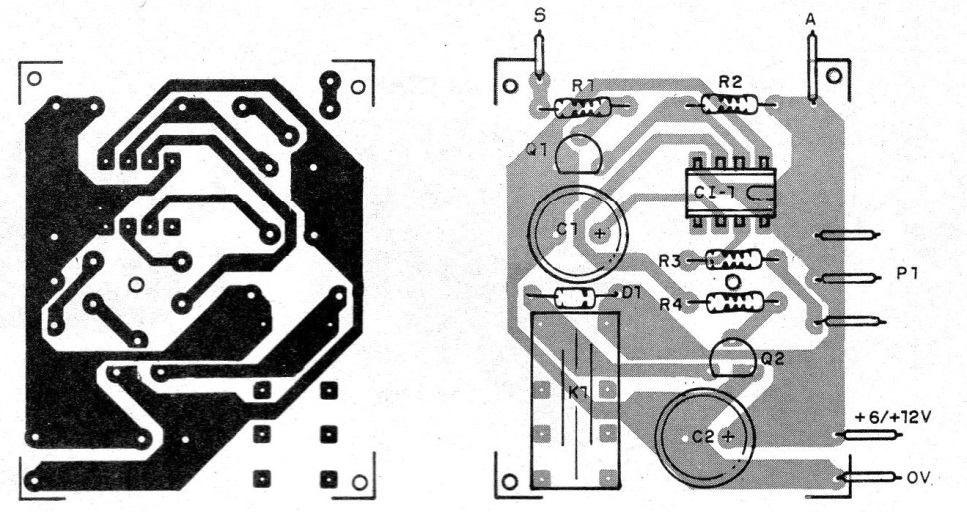
For the relay and the integrated we suggest the use of sockets. The connection cable to the sensor should not be long. If it is more than one meter long, it must be armored.


