
With this simple experimental design we can control a motor from a flashlight or ambient light. The circuit operates with motors from 3 to 6 V.
Using a common LDR as a sensor, we can control a small motor from the light of a flashlight or even from the ambient light itself.
The circuit is very sensitive and can be used in demonstrations, as part of an automation or in a simple experimental robot that moves with the presence of light.
The maximum recommended current for the motor is 500 mA, in which case the circuit should be powered by medium or large batteries.
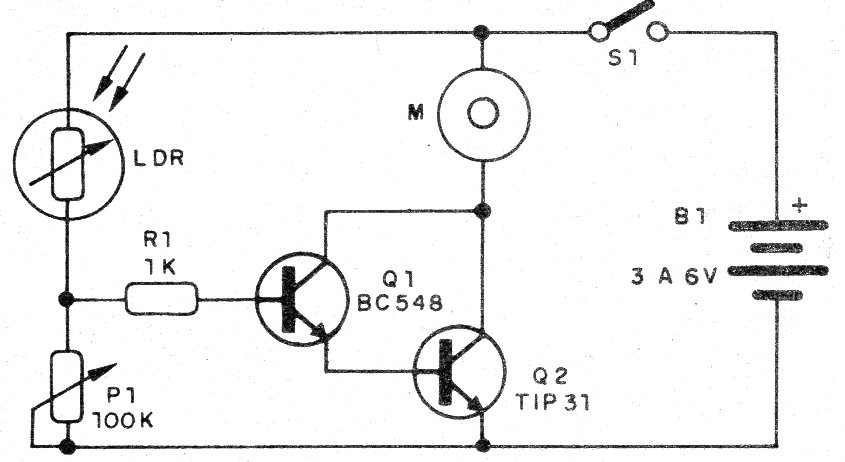
In figure 1 we have the complete diagram of the control.
In figure 2 we have the assembly done on a small terminal strip.
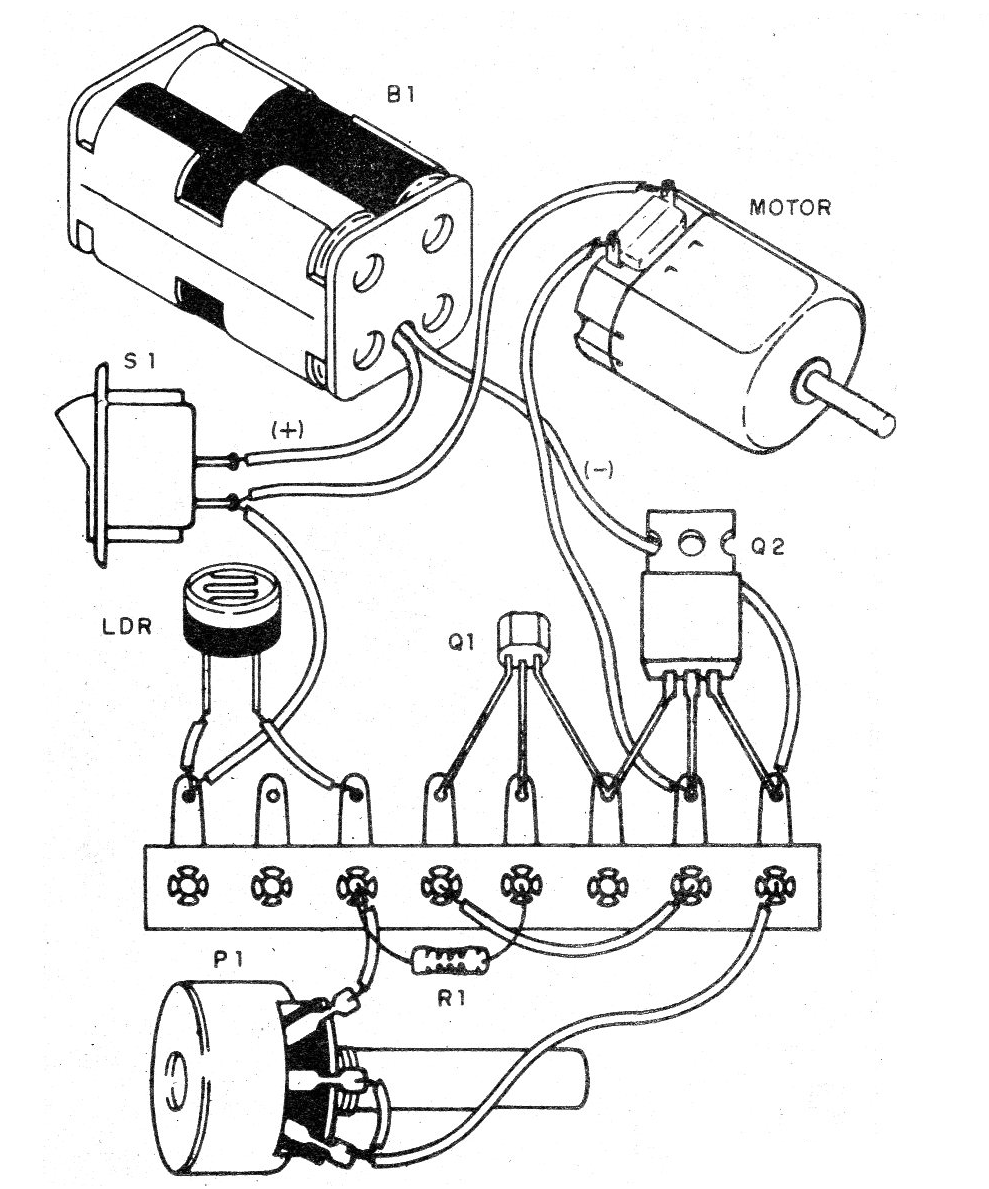
On assembly, observe the positions of the transistors and the polarity of the batteries.
The resistor is 1/8 W with any tolerance and the LDR can be of any ordinary round type.
The potentiometer is used to adjust the sensitivity of the circuit depending on the illumination for tripping.
Mount the LDR in a tube with lens for greater directivity and sensitivity.
Parts List
Q1- BC548 - NPN general purpose transistor
Q2 - TIP31 - NPN power transistor
R1 - 1 k ohms - resistor - brown, black, red
P1 - 100 k ohms - potentiometer
LDR - round common LDR
M - 3 to 6 V motor with up to 500 mA current
S1 – On-Off switch
B1 - 3 to 6 V - batteries - see text
Several:
Terminal strip, battery holder, wires, solder, etc.


